
VIETNAMESE SUBJECTS
Explanations
Subjects in Vietnamese work differently than in English. For example, « little brother » can mean « I » as well as « you. »


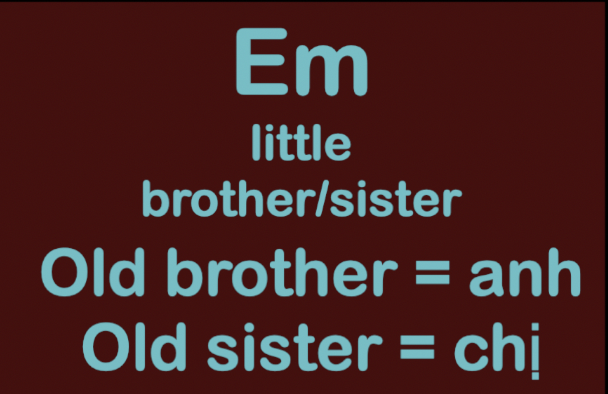
Brothers and sisters
Please note that you also refer to a person the same age as your older or younger sibling in the same way as if they were part of your family.
We also use « anh » and « em » in couples.

Parents
Bố, mẹ = Parents in the north (father, mother)
Ba, má = Parents in the south (mom, dad)
We only use these subjects for our real parents or for someone acting as a second father or second mother.
Note that we can also say « cha » for the father.
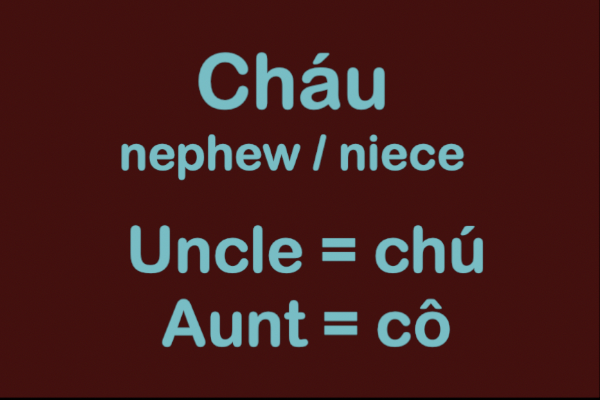
Uncles, aunts, nephews and nieces
We use these subjects not only for nephews, nieces, uncles and aunts but also for people who could be the same age as our children or parents.
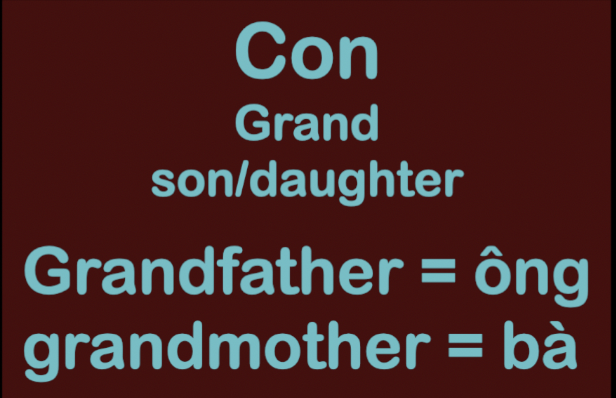
Grandfather and grandmother
These topics are to be used for our grandparents and for people of that age.
Note that we also use use the word « con » for sons and daughters as well as people of that age group.
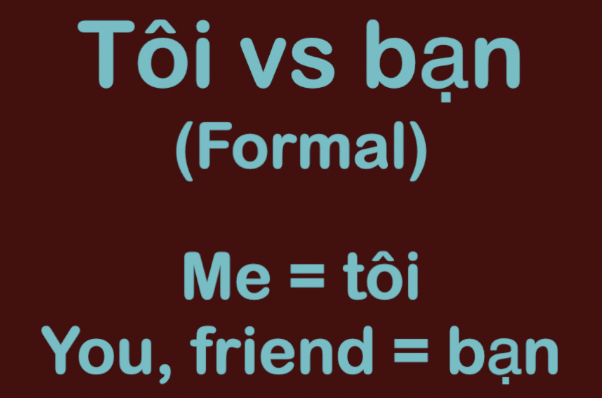
You and me
« Tôi » is used to mark a separation between oneself and others. For example, we can use « tôi » in place of « anh » and « em » when there is coldness in a couple. It is also used to say « I » or « me » when we do not know which subject to employ.
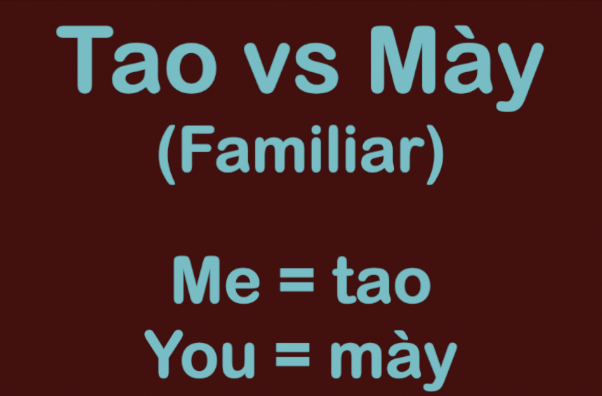
You and me (familiar)
You can use these topics with people you don’t like or with your best friends.
Note: You can see that there are masculine and feminine words representing the older age groups but not the younger ones.
Examples: em, anh, chị
You can assign sexes to younger subjects using « trai » and « gái. » For example, « con trai » means « son » or « boy » and « con gái » means « daughter » or « girl. » You can do the same using em (em trai, em gái).
⚠️ There are still other topics but knowing these is enough to communicate with anyone.
⚠️ If we talk to someone about someone else in the third person, the subject used for that person depends on how we normally call him/her and not as the person we’re talking to would.
Example: If I’m talking to my mom about my little brother, I would call my little brother « em » and not « con. »
During a first meeting , we quickly ask the age to know which subjects to use next.
Bạn bao nhiêu tuổi? = How old are you?
Anh/chị/em (#) tuổi. = I am (#) years old (replace the « bao nhiêu » with the age).
He, she, it, we, you and they
- Subject + ấy = He, she (anh ấy, chị ấy, etc.)
Nó = It (used for younger people too)
- Mình = We or I (better than using « tôi »)
Chúng tôi = « We » as a group of people (rarely used)
Chúng ta = « We » as everybody (rarely used) (người ta = people)
- Các + subject = You (plural)
(Các bạn, các anh, các chị, etc.)
- Họ = They